
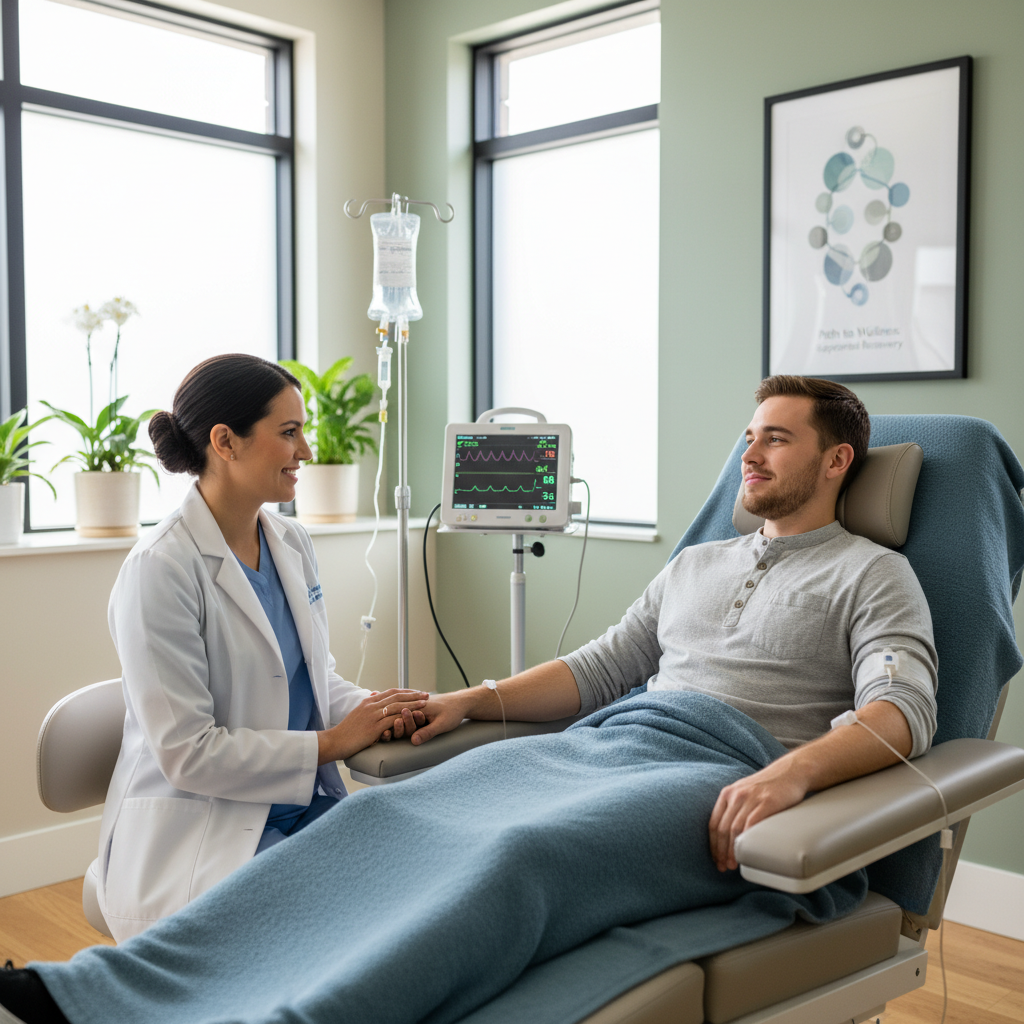
What You Need to Know About Supervised Detox for Withdrawal
What supervised detox for withdrawal means
When you are physically dependent on alcohol, opioids, benzodiazepines, or other drugs, quitting suddenly on your own can be dangerous. Supervised detox for withdrawal is a medically managed process where a team of licensed professionals monitors you 24 hours a day as your body clears substances.
In supervised detox, you are not simply left to “tough it out.” Physicians, nurses, and clinical staff evaluate your health, manage withdrawal symptoms with medications when appropriate, and respond quickly if complications develop. Federal guidelines from the Substance Abuse and Mental Health Services Administration (SAMHSA) recommend supervised detox for alcohol, sedative hypnotic, and opioid withdrawal, especially in hospital or 24 hour medical care settings, because of the safety and humanitarian benefits this level of care provides [1].
Supervised detox is often your first step before you enter a longer term medical detox program or residential treatment. It focuses on medical stabilization and safety so that you can move into the next phase of care as strong and clear headed as possible.
Why quitting on your own can be unsafe
You may feel tempted to stop “cold turkey” at home. For certain substances, that choice can put your life at risk.
Serious medical risks of unsupervised withdrawal
Withdrawal can trigger a wide range of symptoms, from mild discomfort to life threatening emergencies. SAMHSA and other government experts point out several high risk situations where home detox is not appropriate [1]:
- Alcohol and benzodiazepines can cause seizures and delirium tremens
- Opioids can lead to severe dehydration, electrolyte imbalance, and heart complications
- Sedatives and some prescription drugs can cause dangerous changes in blood pressure, heart rate, and breathing
In severe alcohol withdrawal, for example, delirium tremens can involve confusion, hallucinations, rapid heart rate, high blood pressure, and seizures. Without immediate medical care, this condition can be fatal.
When you should not detox alone
Government guidelines recommend a 24 hour supervised setting if you:
- Have a history of severe or complicated withdrawal
- Have gone through multiple withdrawals in the past
- Live with heart, liver, lung, or other serious medical conditions
- Have co occurring mental health symptoms such as suicidal thoughts or psychosis
- Lack a stable, supportive home environment
If any of these apply to you, a clinical detox facility with constant monitoring is strongly recommended for your protection.
What happens before supervised detox begins
Your detox stay starts with a focused medical and psychosocial assessment. This step is critical for choosing the safest level of care and the right medications for you.
Comprehensive medical and psychosocial assessment
In a supervised setting, you can expect:
- A full medical history and physical exam
- Screening for co occurring medical and mental health conditions
- Review of all substances you use, including doses, frequency, and route of use
- Lab tests as needed, such as blood work, ECG, and pregnancy testing when appropriate
SAMHSA’s consensus panel underscores that this assessment guides whether you need inpatient hospitalization, 24 hour supervised detox, or if a lower level of care is appropriate [1]. This is also when staff will confirm your insurance benefits and explore options for a detox that accepts insurance.
If you are in crisis or at very high risk, programs that provide same day detox admission and rapid medical clearance can be life saving.
How supervised detox manages withdrawal symptoms
Once your detox plan is in place, the medical team focuses on keeping you as safe and comfortable as possible during withdrawal. This may involve supportive care on its own or a structured detox with medication support.
Medical monitoring and vital sign checks
During 24 hour detox care, nurses and providers regularly check your:
- Blood pressure and heart rate
- Breathing rate and oxygen levels
- Temperature and hydration status
- Level of alertness, orientation, and agitation
For alcohol withdrawal, staff may use standardized scales like the Clinical Institute Withdrawal Assessment for Alcohol, Revised (CIWA Ar), to objectively score your symptoms and guide dosing of medications [1]. Symptom based dosing reduces unnecessary medication while maintaining safety, and is only appropriate when trained staff can assess you frequently.
Medication options used in supervised detox
In a supervised setting, physicians have access to several evidence based medication strategies that are not safe to use on your own:
-
Alcohol withdrawal
Long acting benzodiazepines are the preferred medications to prevent seizures and delirium tremens. SAMHSA notes that regimens may include loading doses, symptom triggered dosing guided by CIWA Ar, and tapering schedules once you stabilize [1]. Anticonvulsants can also be used to reduce seizure risk in some cases. -
Opioid withdrawal
Medications such as methadone or buprenorphine can reduce cravings and ease symptoms. Clonidine or similar medications may be used to lessen physical signs like sweating and rapid heart rate. These medications require careful dose selection and monitoring. -
Sedative hypnotic withdrawal
Benzodiazepines or related agents are typically used to prevent seizures and severe agitation when you are dependent on these medications.
The choice of medication, dose, and schedule is tailored to your age, medical history, and substance use pattern. This individualized approach is a core benefit of detox with medical supervision compared with trying to quit without help.
Levels of supervised detox care
Not every person needs hospital level care, but many need more monitoring than an outpatient visit can provide. Your assessment will determine which level of acute withdrawal treatment is recommended.
Inpatient hospital or medically managed detox
Hospital based or intensive drug detox center units are appropriate if you:
- Have a history of severe withdrawal, seizures, or delirium
- Live with serious medical illnesses or pregnancy
- Show signs of unstable vital signs or confusion
SAMHSA highlights hospitalization or 24 hour medical care settings as the preferred approach for alcohol, sedative, and opioid withdrawal that carries a risk of complications [1]. This level of care provides immediate access to advanced monitoring, IV fluids, and emergency interventions if needed.
Residential or standalone clinical detox
A standalone clinical detox facility or residential private detox program can provide 24 hour nursing support, frequent physician visits, and structured monitoring in a less intensive medical environment. This setting is often suitable when you need detox for severe substance dependence but are medically stable.
In these programs, supervised detox typically lasts several days, depending on the substance. For alcohol, the highest risk period often falls within the first 2 to 8 days of abstinence [1]. For opioids and some prescription medications, withdrawal can extend longer and may require ongoing medication management in an opioid detox program or similar service.
Substance specific considerations
While the overall principles of supervised detox are similar, each substance presents distinct medical challenges.
Alcohol detox
If you drink heavily on a regular basis or have had withdrawal symptoms in the past, a supervised alcohol detox program is strongly advised. Alcohol withdrawal can escalate quickly, and seizures sometimes occur within the first 24 to 48 hours. SAMHSA recommends benzodiazepine based regimens as first line treatment, with dosing adjusted according to your CIWA Ar scores and clinical status [1].
Opioid and fentanyl detox
Opioid withdrawal is rarely fatal on its own, but uncontrolled symptoms can push you back to use, which increases overdose risk. In a supervised fentanyl detox program or broader opioid unit, doctors can start you on stabilizing medications, keep a close eye on your vital signs, and help you move directly into ongoing care once you are medically stable.
Benzodiazepine detox
Benzodiazepine withdrawal carries a significant seizure risk, especially with high dose or long term use. Tapering under a benzodiazepine detox program with 24 hour monitoring reduces this risk. SAMHSA and other agencies emphasize that abrupt discontinuation of sedatives is unsafe without medical oversight [1].
From detox to the next phase of treatment
Detoxification is an essential first step, but by itself it is not addiction treatment. Federal research on Veterans Health Administration programs found that detox works best when it functions as an entry point to ongoing substance use treatment, such as residential or outpatient care, with structured follow up planning and coordination [2].
Planning beyond medical stabilization
During your stay, your team will work with you on a detox admissions process that includes:
- Identifying the next level of care, for example residential treatment or intensive outpatient
- Scheduling your first appointment or intake so there is no gap after discharge
- Coordinating with case managers or family members when appropriate
- Reviewing relapse prevention basics and medication plans
This “warm handoff” approach is a key part of safe withdrawal management, because it lowers the chance that you leave detox and return directly to substance use.
When to seek supervised detox right away
You should seek immediate help from a supervised detox program or emergency department if you:
- Have chest pain, shortness of breath, confusion, or hallucinations while withdrawing
- Experience a seizure or have a history of withdrawal related seizures
- Are pregnant and physically dependent on alcohol, opioids, or sedatives
- Feel unable to stay safe on your own or are having thoughts of harming yourself
A same day detox admission program or hospital based detox service can provide urgent evaluation and rapid initiation of treatment. When you are ready, a medically supervised setting offers a safer alternative to going through withdrawal alone and positions you for a smoother transition into detox before treatment and longer term recovery care.
Supervised detox for withdrawal is not a sign of weakness. It is a medically sound, evidence based step that prioritizes your safety, stabilizes your health, and helps you take your first solid step away from substance dependence and toward a more sustainable recovery path.
References
- (NCBI Bookshelf)
- (PMC)