
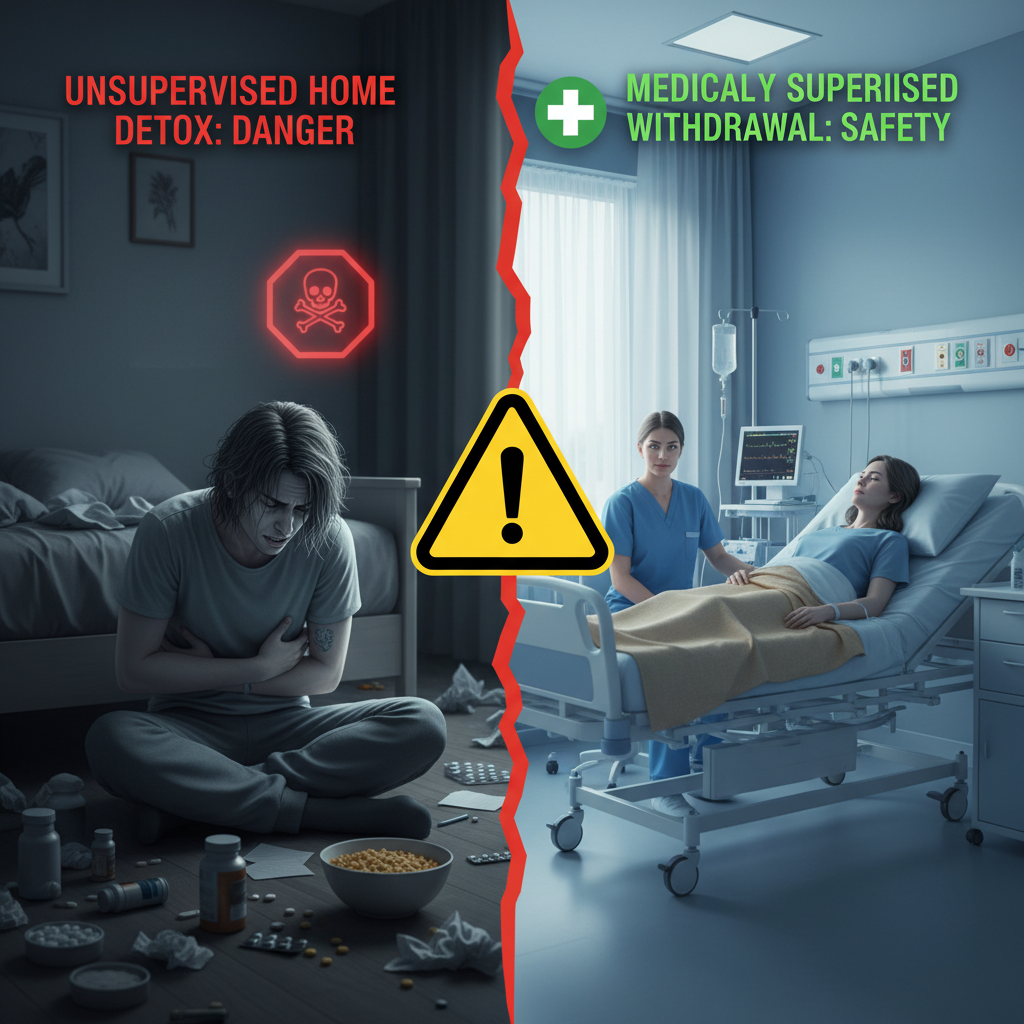
Why detoxing at home is so dangerous
If you are thinking about quitting alcohol or drugs on your own, you might be weighing the risks and benefits of detoxing at home. The dangers of detoxing at home are very real, especially if you have been using heavily or for a long time. Without medical support, withdrawal can move from uncomfortable to life threatening much more quickly than you expect.
Alcohol withdrawal is considered the most dangerous type of substance withdrawal, even more serious than withdrawal from heroin or cocaine, with potential complications that include seizures and delirium tremens (DTs) that can be fatal [1]. When you understand what actually happens in your brain and body during withdrawal, it becomes clear why a medically supervised detox is the safest way to start recovery.
Detox is not the entire treatment process. It is a short-term, medically supervised stabilization phase that helps you get through withdrawal safely and prepares you to move into structured addiction treatment afterward. You are not signing up for months away from home when you choose medical detox, you are choosing to survive the first step safely.
What happens in withdrawal inside your body
When you use alcohol or drugs regularly, your brain and nervous system adapt to having those substances present. Your body works hard to balance the sedating or stimulating effects so that you can function. Over time, your system becomes dependent on the substance just to feel “normal.”
When you stop suddenly, your brain and body are thrown out of balance. This is withdrawal. The specific symptoms, timing, and intensity depend on what you use, how much, how often, and your overall health. For example, if you drink heavily, you can review the typical alcohol withdrawal symptoms timeline. If you use opioids, the opioid withdrawal timeline explained can help you understand what to expect.
Although each substance has its own pattern, withdrawal usually involves:
- Overactive nervous system, causing shaking, sweating, rapid heart rate, and anxiety
- Changes in blood pressure and heart rhythm
- Disturbed sleep, agitation, and mood swings
- Nausea, vomiting, diarrhea, and dehydration
At first, these symptoms may seem manageable. The danger is that they can escalate without warning. What begins as “I feel awful but okay” can turn into seizures, hallucinations, or dangerous heart problems very quickly. At home, it is almost impossible to predict or respond safely if this happens.
Specific dangers of detoxing at home
Detoxing at home might feel private, convenient, or less intimidating, but there are serious medical and emotional risks you cannot ignore. These risks are especially high with alcohol, benzodiazepines, and long-term opioid use.
Life threatening alcohol and benzo withdrawal
If you drink a lot or use benzodiazepines like Xanax, Valium, or Klonopin, detoxing at home is particularly dangerous. Medical experts strongly advise against it because of the risk of seizures and delirium tremens, which can lead to heart attack and death if untreated [2].
Key facts to be aware of:
- Alcohol withdrawal is the most dangerous form of substance withdrawal, more dangerous than heroin or cocaine withdrawal [1]
- Delirium tremens, a severe complication of alcohol withdrawal, has a fatality rate of 37% if untreated, but with high quality medical care the risk drops to under 5 percent [1]
- Seizures can appear as soon as 2 hours after the last drink, and DTs typically emerge 48 to 72 hours after you stop drinking [2]
Alberta Health notes that alcohol detox can cause nausea, vomiting, sweating, shakiness, and intense worry in milder cases, and confusion, irritability, hallucinations, trembling, and seizures in severe cases [3]. These symptoms may begin within hours or after a few days and can last for weeks, which makes home detox difficult and unpredictable [3].
People who consume large amounts of alcohol are strongly advised not to attempt detox at home because severe withdrawal can be fatal without proper medical care [3].
Severe complications with opioids and other drugs
You might hear that opioid withdrawal is “not deadly, just miserable.” That is misleading. Quitting long term opioids or other drugs cold turkey at home can lead to:
- Severe dehydration from persistent vomiting and diarrhea
- Dangerous blood pressure changes
- Heart rhythm problems
- Seizures and delirium in some cases
American Addiction Centers notes that quitting drugs cold turkey at home, especially after long term alcohol or opioid use, can trigger severe and potentially fatal withdrawal symptoms such as seizures, delirium, and intense nausea [4]. Managed incorrectly, withdrawal can put you at real risk.
Lack of emergency support and medication
At home, you do not have immediate access to prescription medications that can stabilize your symptoms, prevent seizures, or protect your heart. You also lack continuous monitoring. Professional detox centers rely on medical staff and medications to safely manage withdrawal symptoms and reduce the risk of harmful effects, something that cannot be ensured at home [4].
Detoxing at home also means:
- No continuous monitoring of vital signs like heart rate, blood pressure, and oxygen levels
- No rapid response if you develop chest pain, shortness of breath, severe confusion, or seizures
- Delays in calling emergency services if things go wrong at night or when you are alone
Alberta Health recommends immediate medical attention if withdrawal symptoms become severe, including confusion, hallucinations, or seizures, because timely care can prevent serious complications [3].
Higher risk of relapse and the “kindling” effect
Detoxing at home also keeps you in the same environment where you have been drinking or using. Your normal triggers are still all around you, which makes relapse much more likely. American Addiction Centers notes that home environments can contain powerful triggers that increase relapse risk during withdrawal [4].
If you go through repeated cycles of stopping and starting again on your own, you can experience the “kindling phenomenon.” This means each new withdrawal episode becomes more severe and more dangerous over time [2]. In other words, repeated attempts to detox at home can actually make your future withdrawal more life threatening.
Misleading “detox” diets and herbal cleanses
You might also see online programs offering “at home detox” in the form of extreme diets, fasting, or herbal supplements. These are not safe substitutes for medical withdrawal care and they do not treat substance dependence.
According to MD Anderson Cancer Center:
- Detox diets that involve complete fasting, water or juice only, or very strict regimens can cause electrolyte imbalances, vitamin and mineral deficiencies, diarrhea, stomach problems, and fatigue [5]
- Herbal detox products are not reviewed by the FDA for safety or effectiveness before being sold, and some can be toxic to the liver [5]
- Many detox regimens have no solid scientific evidence supporting them and rely on testimonials instead of medical supervision, which raises safety concerns when you are already physically vulnerable [5]
Your liver already naturally detoxifies your body, and these harsh regimens can actually overload and damage it, especially if you have been drinking heavily [5].
When you need medically supervised detox
It can be hard to know when medical detox is truly necessary. Many people underestimate their dependence or overestimate how much they can tolerate. If you are unsure, reviewing the signs you need medical detox can help you take an honest look at your situation.
In general, you should not attempt to detox at home if:
- You drink large amounts of alcohol daily or binge frequently
- You use benzodiazepines regularly, even at prescribed doses, and especially in combination with alcohol
- You have been using opioids or other substances heavily or for a long time
- You have ever had a seizure, delirium tremens, or severe withdrawal in the past
- You have heart disease, liver disease, or other serious medical conditions
- You do not have stable, 24/7 support at home from someone who can call for help
Columbus Recovery Center notes that home detox from alcohol is only advisable, if at all, in people with very mild withdrawal symptoms and only after talking directly with a doctor. Anyone with moderate to severe addiction should seek medically supervised detox instead [1].
If you are still unsure, you can also explore when is detox medically necessary to better understand how clinicians make this decision.
How medical detox works to keep you safe
Medical detox is designed to manage withdrawal safely, stabilize you physically and emotionally, and prepare you for the next phase of treatment. It is not a punishment or a last resort. It is a protective medical service that responds to very real risks.
You can learn more detail in how medical detox works, but in general, a medically supervised detox program offers:
- Initial assessment of your substance use history, health, and risks
- 24/7 monitoring of your vital signs and mental state
- Evidence based medications used during detox to reduce symptoms and protect your brain and body
- Immediate access to emergency interventions if your condition changes
- Supportive counseling and reassurance as you move through the process
Most people are surprised by how manageable withdrawal becomes with proper medical support. You are not expected to “tough it out” alone. Instead, you are given tools that make the process safer and more tolerable.
The role of medications during detox
Medications are not used to replace one addiction with another. They are used in carefully monitored doses to:
- Prevent or reduce seizures and DTs in alcohol and benzodiazepine withdrawal
- Calm dangerously overactive nervous system activity
- Treat pain, nausea, and insomnia appropriately
- Lower the risk of complications from heart problems or high blood pressure
You can review specific medications used during detox to see how they work and why they are different from unsupervised use.
Professional detox centers rely on trained clinical staff and appropriate medications to manage symptoms and prevent harmful effects, which is why most people who want to detox safely choose professional services in a controlled environment [4].
What detox is (and is not) in your recovery journey
Detox is a beginning, not a cure. Understanding this helps you set realistic expectations and reduces fear about what comes next.
Detox as a stabilization phase
Detox has one primary goal, to stabilize you physically and mentally so you can participate in ongoing treatment. This stabilization phase:
- Clears alcohol or drugs from your system under supervision
- Manages and reduces withdrawal symptoms
- Identifies any co occurring medical or mental health needs
- Helps you feel safe enough to start thinking about next steps
It is usually time limited. If you are wondering how long does detox take, the answer depends on what you use and your health, but for many substances it ranges from a few days to about a week, sometimes slightly longer if your situation is more complex.
Detox is not the same as residential or inpatient rehab. It does not focus on deep therapy, trauma work, or long term life changes. It gets you stable enough to begin that work safely afterward.
What happens immediately after detox
Knowing what happens after detox can make the whole process feel less uncertain. Once your withdrawal symptoms are controlled and your condition is stable, you and your treatment team discuss next steps that fit your needs and circumstances.
Common options include:
- Transitioning to residential or inpatient addiction treatment if you need a structured, 24/7 environment
- Entering an intensive outpatient or partial hospitalization program if it is appropriate and safe
- Starting or adjusting medications for ongoing relapse prevention, such as medications for alcohol or opioid use disorder
- Developing an aftercare plan that may include therapy, support groups, and medical follow up
Alberta Health emphasizes that follow up care and monitoring by healthcare professionals are critical during and after detox to manage symptoms, prevent complications, and support continued recovery [3]. Detox is your entry point into this continuum of care, not the end of your journey.
Addressing your fears about medical detox
It is understandable if you feel nervous about entering a medically supervised detox. You might feel afraid of being judged, of feeling out of control, or of the unknown. You might also worry about cost, family responsibilities, or work.
Some concerns you may have, and how to think about them:
- “I am afraid detox will be worse than using.”
Without medical support, your fear is understandable, because withdrawal can be severe. In a supervised program, you are not alone or unmedicated. Staff are there to anticipate and treat your symptoms so you do not simply suffer through them. - “I cannot disappear for months.”
Detox is usually measured in days, not months. It is a brief stabilization step before you and your team decide which level of ongoing care is realistic for you. - “What if something goes wrong?”
In medical detox, that is exactly why clinicians are monitoring you. If complications appear, they can respond immediately and adjust your treatment before problems become critical.
If you are considering this step, you can also explore the detox admissions process so that you know what to expect from the first phone call through your arrival and initial assessment.
Taking a safer first step toward recovery
The dangers of detoxing at home are not about weakness or lack of willpower. They are about biology and safety. Alcohol and drug withdrawal can be unpredictable, and in some cases they can be deadly without proper medical care.
Professional detox programs exist to protect you during this vulnerable period, to stabilize your body and mind, and to guide you into the next phase of treatment with a clearer head. Studies show that people who complete professional detox and follow it with addiction treatment are more likely to remain abstinent for years than those who attempt to detox at home without support [2].
If you recognize yourself in any of the risks described here, you do not need to face withdrawal alone. Reaching out for medically supervised detox is not an overreaction. It is one of the most practical and protective choices you can make for yourself and for the people who care about you.