
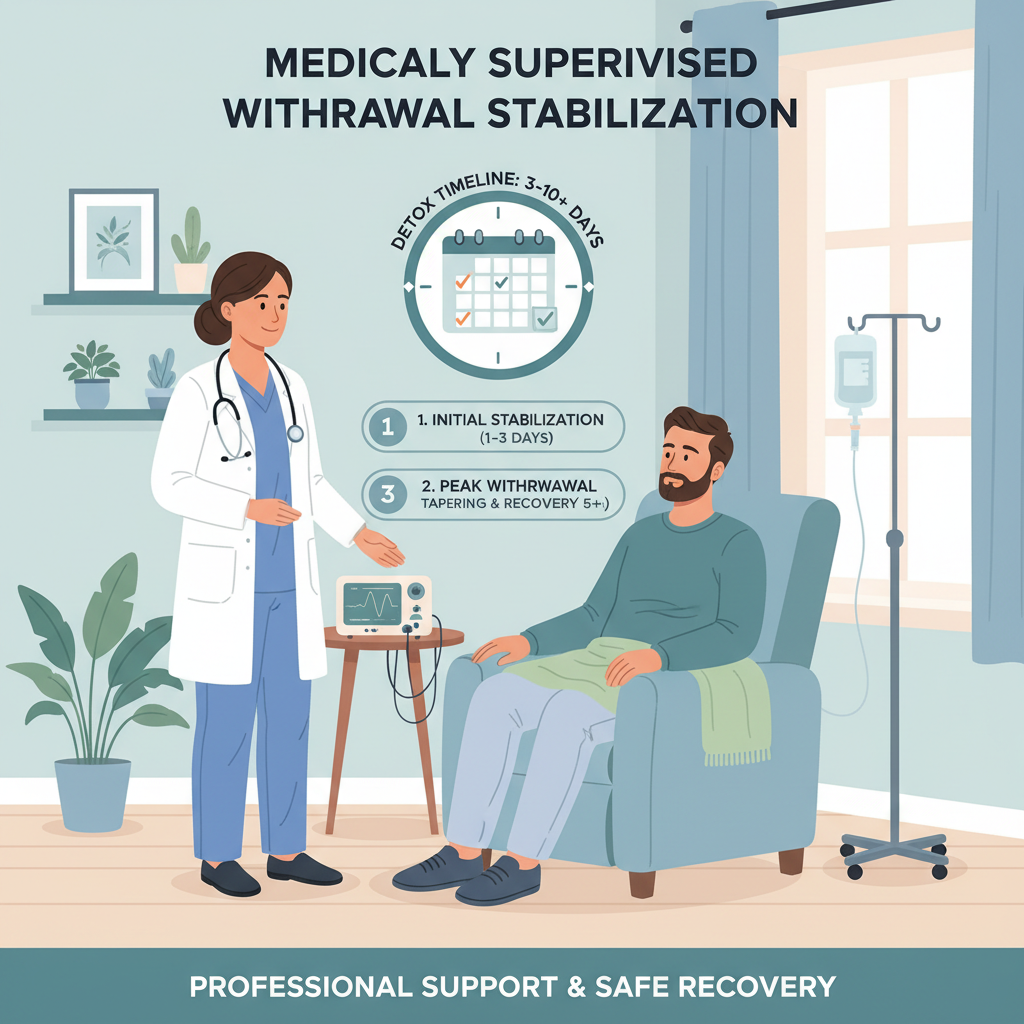
Why detox length matters for your safety
When you are asking, “how long does detox take,” what you are really asking is, “how long will my body feel unstable and at risk while I stop using?” Most medically supervised detox programs last somewhere between 3 and 10 days, although the exact timeline depends on what you have been using, how long you have been using it, and your overall health [1].
Detox is not the same thing as full addiction treatment. It is a short, intensive medical stabilization phase that helps you move safely from active use to a place where you can think clearly and participate in ongoing care. Understanding how long detox may take, and what happens at each stage, helps you prepare mentally, reduce fear, and make safer choices as you plan your next step.
What “detox” really means
Detox, or medically supervised withdrawal stabilization, is the process of helping your body clear alcohol or drugs while medical staff monitor and manage withdrawal symptoms. The goal of detox is safety and stabilization, not to “cure” addiction.
You may hear different terms that all refer to pieces of this same process:
- Medical detox
- Withdrawal management
- Stabilization or acute withdrawal care
In a supervised setting, you are monitored for changes in blood pressure, heart rate, breathing, temperature, and mental status. Medications may be used to reduce withdrawal symptoms, prevent complications like seizures, and keep you as comfortable as possible. You can learn more about common medications in our guide on medications used during detox.
Detox is the first step, not the finish line. Once your body is medically stable, you still need structured treatment to address the mental, emotional, and behavioral sides of addiction. You can explore that next phase in more detail in what happens after detox.
Typical detox timelines by substance
There is no single answer to “how long does detox take” because each substance has its own withdrawal pattern. The timelines below describe acute detox, meaning the period when your physical symptoms require medical supervision.
Alcohol
Alcohol withdrawal can start surprisingly quickly. Symptoms often begin within 6 to 24 hours after you significantly reduce or stop heavy drinking, peak between 24 and 72 hours, and typically resolve within 3 to 7 days for many people [2].
For some, especially those who have been drinking heavily for years, symptoms like sleep problems, anxiety, or mood changes can linger for weeks or months even after the high risk period has passed [3]. A medically supervised program will focus on the first 3 to 7 days when serious complications are most likely.
You can see a more detailed breakdown of stages and symptoms in our resource on the alcohol withdrawal symptoms timeline.
Opioids
Opioids such as heroin, fentanyl, oxycodone, or hydrocodone usually have a detox window of about 5 to 10 days for acute physical withdrawal [4]. You might feel symptoms starting within 8 to 24 hours for short acting opioids or up to 36 hours for long acting medications.
Physical symptoms like muscle aches, diarrhea, goosebumps, and vomiting are usually most intense in the first several days, then gradually ease. Cravings and sleep problems may continue beyond the initial week. For a closer look at the progression of symptoms, visit our guide on the opioid withdrawal timeline explained.
Benzodiazepines
Benzodiazepines, such as Xanax, Ativan, or Valium, have one of the longest and most unpredictable detox timelines. Acute withdrawal can last 2 to 4 weeks or longer, especially if you have been taking higher doses or using them for a long time [4].
Because of the risk of seizures, hallucinations, and severe anxiety, benzodiazepine detox is usually done through a slow, medically managed taper rather than an abrupt stop. This is an area where a supervised setting is particularly critical.
Stimulants and other substances
For stimulant drugs like cocaine or methamphetamine, physical withdrawal symptoms usually start within 24 hours and are often most intense over the first several days. Much of the difficulty with stimulant detox, however, is psychological, including depression, fatigue, and intense cravings. These mental health symptoms may require ongoing support beyond the first week [5].
Other substances have their own timelines:
- Alcohol and barbiturates often have severe symptoms in the first 24 to 48 hours
- Benzodiazepines commonly show significant symptoms across 3 to 5 days and beyond
- Hallucinogen withdrawal often appears within the first week
- Marijuana and some opioids can produce symptoms that extend beyond the first week [6]
If you have been using more than one substance, your detox course will be more complex. Polysubstance use can significantly lengthen and complicate the withdrawal period [7].
In most medically supervised settings, detox is planned for 3 to 10 days, but your exact length of stay is adjusted based on how your body responds, what you have been using, and how stable you are [1].
Factors that affect how long detox takes
Even with general timelines, your experience will be unique. Several key factors influence how long detox takes for you specifically.
Substance type and pattern of use
The substance or substances you use, how much you use, and how often you use them all directly shape your detox course. High doses, long term use, and frequent daily use usually mean a more intense and possibly longer withdrawal period [8].
Alcohol and opioids often produce severe physical symptoms that require several days of close monitoring. Stimulant withdrawal tends to be more psychological, which may change how long you need intensive medical support versus mental health support [5].
Physical health and age
Your overall health, including the condition of your liver, kidneys, heart, and other organs, affects how quickly your body can process and clear substances. Conditions like liver disease, kidney problems, or metabolic disorders can slow detox and extend the length of time you need medical oversight [9].
Older adults and people with chronic health conditions often require longer detox stays and more medical care to stay safe [8].
Mental health and emotional stability
Co occurring mental health conditions, including anxiety, depression, PTSD, or bipolar disorder, can amplify your withdrawal experience. These conditions may increase your discomfort, prolong symptoms, and lengthen the time you need structured support to stay stable and avoid relapse [8].
In a medically supervised setting, your detox plan can be adjusted to include psychiatric support and medications, when appropriate, to help manage these overlapping conditions.
Genetics, metabolism, and nutrition
Genetic differences influence how quickly your body breaks down substances. Some people metabolize alcohol or drugs more slowly due to genetic factors, which can lead to longer detox periods [4].
Your metabolic rate and nutritional status also matter. Poor nutrition can weaken your body and slow recovery, while hydration and adequate nutrients support your body as it stabilizes [8].
Environment and support system
Your environment during detox, and the support around you, can impact how quickly you stabilize. Unstable housing, ongoing exposure to substances, or high stress surroundings may slow your progress. In contrast, a medically supervised environment with healthy routines, consistent monitoring, and supportive staff can shorten and smooth the detox process [5].
A stable environment after detox also reduces your risk of immediate relapse, which is one reason planning the next step in care is so essential.
Why medically supervised detox is safer
You may be tempted to detox at home so you can control your surroundings or avoid telling others. However, withdrawal from alcohol, benzodiazepines, and sometimes opioids can cause complications that develop quickly and without much warning.
Severe vomiting and diarrhea can cause rapid dehydration and life threatening problems. Alcohol withdrawal can lead to seizures or a condition called delirium tremens, which requires hospital level care. Benzodiazepine withdrawal can also trigger seizures and severe mental health symptoms [10].
Medically supervised detox provides:
- 24 hour monitoring of vital signs and mental status
- Access to medications that can reduce symptoms and lower risks
- Immediate response if complications appear
- A controlled environment that removes access to substances
Attempting to detox without support can extend your suffering and increase the likelihood of relapse. To understand the specific risks of going it alone, you can review the dangers of detoxing at home.
If you are unsure whether you actually need medical supervision, our guide on when is detox medically necessary can help you evaluate your situation, and signs you need medical detox outlines red flags to take seriously.
What happens during each phase of detox
Detox is usually divided into three overlapping phases, rather than strict day by day rules. The length of each phase varies depending on your situation, but the overall pattern is similar.
1. Intake and assessment
Your detox stay begins with a medical assessment. Staff will typically:
- Ask about your substance use history
- Review your medical and mental health history
- Take vital signs and possibly lab work
- Screen for withdrawal severity and risk factors
This information guides decisions about medications, monitoring level, and how long you may need to stay. You can read more about what to expect before arrival in our overview of the detox admissions process.
2. Acute withdrawal and stabilization
The acute phase is when symptoms are most intense and your body is adjusting to the absence of substances. During this period, you can expect:
- Regular checks of blood pressure, pulse, temperature, and oxygen levels
- Monitoring for hallucinations, confusion, or suicidal thoughts
- Medications to manage symptoms like nausea, insomnia, anxiety, or pain
- Hydration support and, when needed, nutritional support
This phase often spans the first several days, but it continues as long as your symptoms remain medically significant.
3. Transition to post acute support
Once your vital signs are stable, your risk of severe complications decreases. You may still have symptoms such as low mood, anxiety, sleep problems, or cravings. This is sometimes called post acute withdrawal.
At this point, the focus shifts from medical crisis management to planning your next step in treatment. Your team will help you select an appropriate level of care, such as outpatient treatment or another structured program, based on your needs and resources. For a detailed look at how this handoff works, visit how medical detox works and what happens after detox.
How long you will stay in detox
Although there is variation, most medically supervised detox programs aim for a stay within the 3 to 10 day range [1]. Your length of stay is not a fixed number chosen in advance. Instead, it is adjusted based on:
- Your substance use history and current symptoms
- Your vital signs and medical test results
- Whether you develop complications during withdrawal
- How quickly your symptoms respond to medication and support
- Co occurring medical or mental health conditions
Sometimes detox is extended beyond the original plan if your body is taking longer to stabilize. In other cases, if symptoms resolve faster than expected, your medical team may clear you to move to the next phase of care sooner.
A shorter detox is not necessarily “better” or a sign that you were less dependent. The goal is simply to ensure that by the time you leave, you are medically stable enough to engage in follow up treatment safely.
Detox is the beginning, not the end
It can be tempting to view detox as a complete solution. You stop using, you suffer through withdrawal, and then you are “done.” In reality, detox only addresses the physical dependence part of addiction.
After detox, you may still experience:
- Cravings and urges to use
- Triggers in your environment or relationships
- Sleep changes and mood swings
- Anxiety, depression, or other mental health symptoms
Without a plan for what comes next, the risk of relapse is high. Ongoing care might include outpatient counseling, intensive outpatient programs, medication assisted treatment for certain substances, or other structured services that match your situation. Our resource on what happens after detox walks through common options so you can think ahead even as you are focusing on the first step.
Detox is about creating a safe, stable foundation so that you can participate in that longer healing process with a clearer mind and a body that is no longer in crisis.
Taking your next step toward safe detox
If you are weighing whether to start detox now, you may still have unanswered questions. It is normal to worry about how you will feel, how long you will be away from home, and what will happen afterward.
You do not have to solve everything in one decision. A practical place to start is:
- Review the signs you need medical detox to better understand your risk level.
- Learn more about when detox is medically necessary so you can discuss concerns with a professional.
- Reach out to a detox program to complete an intake assessment and get a personalized estimate of how long your detox may take.
Your detox timeline will be your own, shaped by your body, your history, and your current health. What stays consistent is the purpose of detox, which is to move you safely through withdrawal and into the next stage of care. With medical supervision, your risk is lower, your comfort is better managed, and you have a clearer path forward into recovery.
References
- (Addiction Center, Texas Health Resources)
- (Cleveland Clinic, The Plymouth House)
- (Cleveland Clinic)
- (The Plymouth House)
- (Pine Tree Recovery Center)
- (Addiction Center)
- (The Plymouth House, Texas Health Resources)
- (Texas Health Resources)
- (The Plymouth House, Pine Tree Recovery Center)
- (Addiction Center, Cleveland Clinic)