
Alcohol withdrawal can feel unpredictable and frightening, especially if you are not sure what to expect next. Understanding a realistic alcohol withdrawal symptoms timeline helps you prepare, recognize danger signs early, and decide when medical detox is not just helpful but necessary for your safety.
Medical professionals emphasize that alcohol withdrawal is a medical condition, not a test of willpower. Symptoms can begin within hours of your last drink and, in more serious cases, can become life threatening without proper monitoring and medication support [1]. Knowing what usually happens at each stage can help you and your family plan for safe, medically supervised stabilization before you move into longer term treatment.
How alcohol withdrawal develops in your body
When you drink heavily over a long period, your brain and nervous system adjust to alcohol’s constant presence. Alcohol slows activity in your central nervous system, so your brain responds by becoming more active and excitable to compensate.
When you suddenly stop or sharply cut down, that balance is disrupted. There is no alcohol to slow things down, but your brain remains in a highly activated state. This overexcited nervous system is what causes alcohol withdrawal symptoms like shaking, sweating, anxiety, and in severe cases, seizures and delirium tremens [1].
Because this is a physical brain and body response, you cannot “push through” severe withdrawal symptoms safely on your own. This is why medical professionals consider alcohol withdrawal a condition that may require urgent, supervised care, similar to other acute medical events.
If you want to better understand how supervised care works in general, you can read more in how medical detox works and when is detox medically necessary.
Key factors that shape your withdrawal timeline
Your alcohol withdrawal symptoms timeline will not be identical to anyone else’s. However, certain factors make severe or complicated withdrawal more likely and can influence when and how symptoms appear:
- How much and how often you drink
- How long you have been drinking heavily
- Previous withdrawal episodes, including past seizures or delirium tremens
- Co-occurring medical conditions such as heart disease, liver disease, or seizure disorders
- Co-occurring mental health conditions such as anxiety, depression, or trauma related disorders
- Age and general physical health
- Use of other substances along with alcohol
Medical teams use these risk factors to decide whether you can be safely monitored in an outpatient setting, or if you need 24 hour supervised detox. If several of these apply to you, it is important to review the signs you need medical detox before attempting to stop drinking on your own.
Typical alcohol withdrawal symptoms timeline
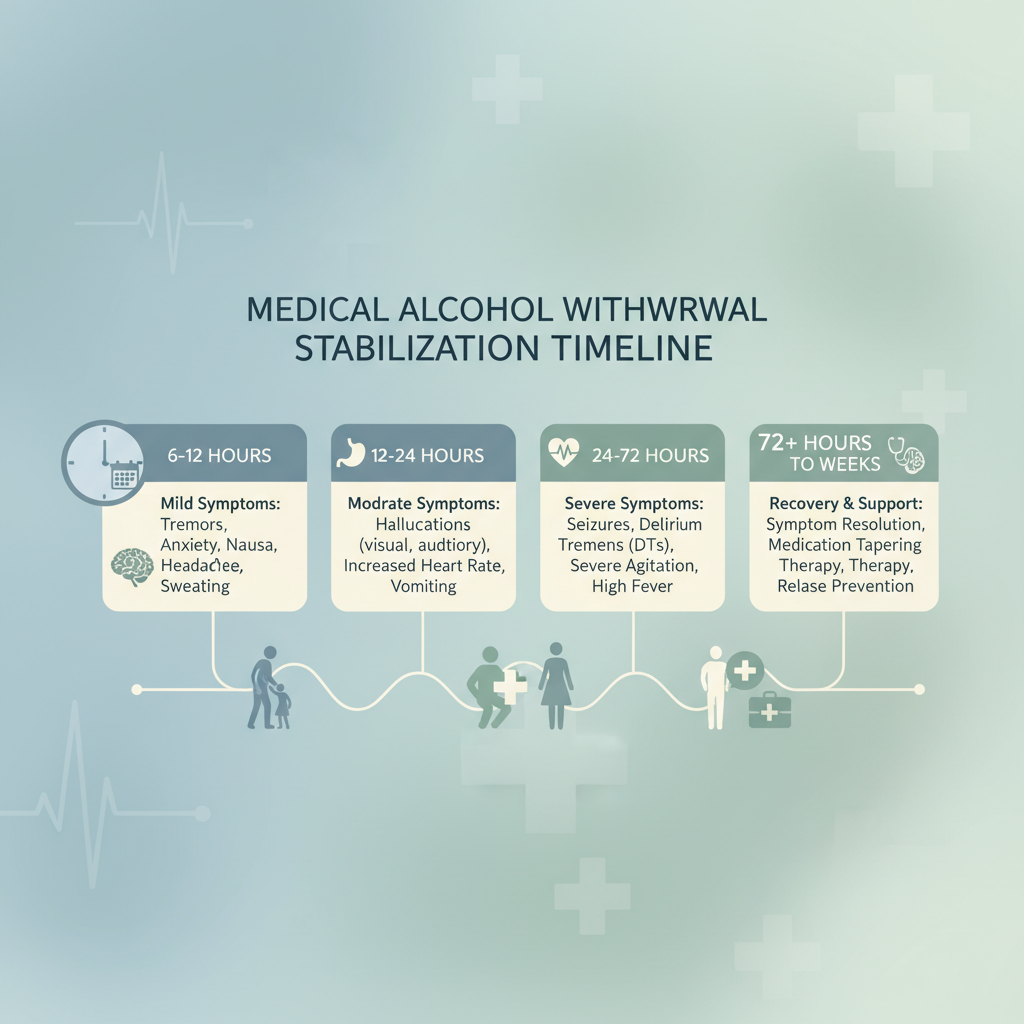
Researchers and clinicians describe the alcohol withdrawal timeline in stages. For many people, symptoms begin within 6 to 24 hours after the last drink and peak around 24 to 72 hours. Some emotional and sleep related symptoms can last for weeks or months as your brain chemistry stabilizes [2].
The table below summarizes common patterns. Your experience may be shorter, longer, milder, or more intense, but this gives you a realistic frame of reference.
| Time after last drink | What often happens | Why this matters |
|---|---|---|
| 6 to 12 hours (sometimes as early as 2 hours) | Anxiety, shaky hands, sweating, headache, nausea, trouble sleeping, mild cravings [3] | Early stage symptoms may seem manageable but can quickly escalate, especially if you have a history of heavy use |
| 12 to 24 hours | Worsening anxiety, tremors, elevated heart rate and blood pressure, nausea, vomiting, possible mild hallucinations such as seeing or hearing things that are not there [4] | Visual, auditory, or tactile hallucinations at this stage are a warning sign and require medical attention |
| 24 to 48 hours | Risk of withdrawal seizures, continued tremors, sweating, confusion, agitation [4] | This is a high risk period for life threatening complications such as seizures, especially without medical monitoring |
| 48 to 72 hours | Peak of severe symptoms, including delirium tremens in some cases: severe confusion, disorientation, hallucinations, rapid heart rate, very high blood pressure, fever [1] | Delirium tremens carries a significant mortality risk if untreated, so this stage must be managed in a medical setting |
| 4 to 7 days | Physical symptoms gradually decrease, but fatigue, poor sleep, mood swings, and cravings can continue [3] | You may feel physically better, but emotional and cognitive symptoms still need support and structure |
Most people complete the acute phase of withdrawal within 5 to 7 days, especially when they receive appropriate medications and monitoring [3]. However, this is not the same as full recovery. Detox is the stabilization stage that gets you medically safe and ready to start focused treatment.
First 6 to 24 hours: Early withdrawal symptoms
In the first hours after your last drink, your body begins to register alcohol’s absence. If you have been drinking heavily, you might notice:
- Anxiety or feeling “on edge”
- Irritability or restlessness
- Hand tremors or shakiness
- Sweating and clammy skin
- Nausea, vomiting, or stomach discomfort
- Headache
- Trouble falling or staying asleep
- Faster heartbeat and mild rise in blood pressure
These symptoms can appear as soon as 2 hours after your last drink in more severe cases and more commonly within 6 to 12 hours [3]. Even if symptoms feel minor, it is important to pay attention to how quickly they are changing.
In a medically supervised detox setting, staff will check your vital signs regularly, ask about your symptoms, and use standardized tools to measure severity. When needed, they can introduce medications used during detox to bring symptoms under control and prevent escalation.
24 to 48 hours: Escalation and seizure risk
Between 24 and 48 hours after your last drink, central nervous system overactivity often peaks. This is when:
- Tremors can become more pronounced
- Sweating may increase
- Nausea and vomiting can continue
- Blood pressure and heart rate may climb
- Anxiety and agitation can intensify
- You may experience confusion or disorientation
- Seizures can occur, often without much warning
Withdrawal seizures are most common within this 24 to 48 hour window, but they can appear as early as 2 hours or as late as 10 days after you stop drinking [4]. Seizures are a medical emergency. Even if you have never had a seizure before, heavy drinking and sudden cessation can put you at risk.
Because the danger is so significant in this period, medical supervision is strongly recommended. Staff can intervene quickly with medications and supportive care if they see early signs of seizure risk.
If you are wondering whether you can manage this stage at home, review the dangers of detoxing at home first. Understanding these risks can help you make a safer choice.
48 to 72 hours: Delirium tremens and peak severity
Days 2 and 3, or roughly 48 to 72 hours after your last drink, are usually the most dangerous if you have severe alcohol dependence. This is when delirium tremens, often called DTs, can begin.
Delirium tremens is a serious, potentially fatal complication that may include:
- Severe confusion and disorientation
- Extreme agitation or restlessness
- Intense hallucinations, often visual, sometimes tactile or auditory
- Heavy sweating and high fever
- Rapid heart rate and dangerously high blood pressure
- Fluctuating levels of consciousness
DTs typically emerge 48 to 72 hours after alcohol cessation and can be life threatening without rapid treatment [4]. Mortality rates have been reported as high as 5 to 10 percent when left untreated, which is why this condition is always treated as an emergency [1].
Only a small percentage of people in withdrawal develop delirium tremens, but there is no reliable way for you to accurately predict your own risk at home. A medically supervised detox environment monitors for early signs, adjusts medication doses, and provides continuous observation so that complications can be managed promptly.
Days 4 to 7: Physical stabilization
By days 4 to 7, the acute physical withdrawal symptoms often begin to subside:
- Tremors usually lessen
- Nausea and vomiting typically decrease
- Sweating reduces
- Blood pressure and heart rate may move toward your baseline
- Appetite often begins to return
However, you may still notice:
- Tiredness and low energy
- Brain fog or difficulty concentrating
- Ongoing sleep disturbances
- Fluctuating mood, including irritability or depression
- Strong cravings to drink again
This period is sometimes described as the stabilization phase of withdrawal. You are usually medically safer, but you may not feel like yourself yet. According to clinical sources, some symptoms such as insomnia, fatigue, and mood changes can continue for weeks or even months in rare cases [2].
During medically supervised detox, staff help you manage this transition, adjust medications as needed, and prepare you for your next level of care so that you do not leave in a vulnerable state without support.
For more about how long the overall process may take, you can explore how long does detox take.
Beyond the first week: Post acute withdrawal symptoms
Once the acute withdrawal phase ends, you may enter a period sometimes called post acute withdrawal. This stage is not as intense medically, but it can be frustrating and emotionally challenging. Many people experience:
- Sleep problems, including trouble falling or staying asleep
- Daytime fatigue and low motivation
- Mood swings or periods of anxiety and depression
- Concentration problems or “foggy” thinking
- Strong or unpredictable cravings
These symptoms can ebb and flow for several months as your brain chemistry resets, and in some cases they may persist for 6 months to 2 years, although they gradually become less intense over time [3].
This is one reason detox alone is not considered full treatment. After you are medically stable, structured therapy, peer support, medications, and lifestyle changes all play crucial roles in supporting your long term recovery.
If you are curious about what happens once detox is complete, you can learn more in what happens after detox.
Detox is the beginning of recovery, not the whole journey. Its purpose is to get you medically safe and clear headed enough to engage in ongoing treatment.
Why medical supervision during withdrawal matters
Although about half of people with alcohol use disorder experience withdrawal when they reduce or stop drinking, the severity can vary widely and may be hard to predict in advance [1]. Over 80 percent of people with alcohol use disorder may experience some form of withdrawal symptoms, with a minority developing serious complications such as seizures or delirium tremens [5].
Medical detox is recommended as the first stage of treatment when:
- You drink heavily on a daily basis
- You have previously experienced withdrawal symptoms
- You have a history of seizures or delirium tremens
- You have significant physical or mental health conditions
- You have no stable support system at home
- You have tried to quit before and could not safely manage symptoms
In an inpatient or closely monitored outpatient detox program, trained staff can:
- Track your vital signs around the clock
- Use approved medications to reduce symptoms and lower your seizure or DT risk
- Provide intravenous fluids or nutritional support if needed
- Address co occurring medical issues that arise during withdrawal
- Help you manage anxiety and cravings without turning back to alcohol
Medical detox usually lasts between 3 and 10 days, depending on your needs and how your symptoms respond to treatment [4]. This window is focused on stabilization rather than deep psychological work. Once you are physically safe, you can step into the next level of care with a clearer mind.
If you want to understand how clinicians assess severity for other substances as well, you may find it helpful to compare with the opioid withdrawal timeline explained.
What to expect in a medically supervised withdrawal program
If you decide to enter a medically supervised withdrawal stabilization program, you can expect a structured but focused process. While every setting is different, most follow a similar pattern:
- Admission and medical assessment
When you arrive, a team reviews your alcohol use history, current symptoms, medical conditions, medications, and previous withdrawal episodes. Blood work and vital sign checks are common. This initial assessment helps determine how intensive your monitoring needs to be. For more detail on this phase, you can review the detox admissions process. - Medication supported stabilization
Based on your risk level, you may receive medications that calm overactive brain activity, lower seizure risk, reduce agitation, and control nausea. These are adjusted as your symptoms change. The goal is not to sedate you heavily but to keep you safe, as comfortable as possible, and stable. - 24 hour monitoring and support
During the highest risk period, staff check your vital signs frequently, assess your symptoms, and respond quickly to any changes. You are not expected to manage panic, confusion, or hallucinations alone. This constant oversight is what makes medically supervised withdrawal significantly safer than detoxing unassisted. - Preparation for next steps
As your symptoms decrease, staff begin to shift the focus toward what comes after detox. You and your care team discuss appropriate treatment options, such as outpatient counseling, intensive outpatient programs, or other levels of care that fit your needs. Detox is viewed as the first, necessary step in a larger recovery plan rather than a stand alone solution.
How your timeline connects to long term recovery
Understanding your alcohol withdrawal symptoms timeline is useful, but it is only part of the picture. What you do after the acute phase often has more impact on your long term health and sobriety than the exact number of days you spend in detox.
Once you are medically stable, you have an opportunity to:
- Address underlying emotional and psychological drivers of alcohol use
- Build new coping skills for stress, cravings, and triggers
- Treat co occurring mental health conditions
- Establish healthy sleep, nutrition, and activity patterns
- Create a safety plan and support network for ongoing recovery
Detox is where your body begins to heal from the direct effects of alcohol. Ongoing treatment is where your life begins to change. If you are planning next steps, you may find it helpful to read about how long does detox take and what happens after detox so you can think through a full path from withdrawal stabilization into continued care.
When to seek help immediately
You should seek urgent medical help or call emergency services if you or someone you are with:
- Has a seizure
- Experiences severe confusion, disorientation, or cannot recognize familiar people or places
- Sees, hears, or feels things that are not there
- Has chest pain, trouble breathing, or irregular heartbeat
- Has a very high fever, severe sweating, or uncontrollable shaking
- Cannot keep fluids down due to vomiting
Leaving detox incomplete or trying to manage severe withdrawal alone can be life threatening because symptoms may escalate quickly [4]. If you are unsure how serious your symptoms are, it is safer to reach out for professional assessment than to wait.
Understanding the alcohol withdrawal symptoms timeline gives you clear information so you are not taken by surprise. With medical supervision, appropriate medications, and a plan for what comes after stabilization, you can move through this dangerous period as safely as possible and prepare for the next steps in your recovery.