Expertise provided by Justin, Admissions Director
Does BCBS Cover Rehab in Utah? Coverage, Costs, and How to Verify
When a family calls Lions Gate Recovery in St. George, Utah, and asks if we take Blue Cross Blue Shield, the honest answer is that it depends entirely on which BCBS plan you have. So when you ask, “does BCBS cover rehab in Utah,” the truthful reply is not a simple yes or no. A PPO bought on the exchange covers different services than a small-group HMO through an employer, and an out-of-state BCBS plan follows different authorization rules than a Utah-based plan. We at Lions Gate Rehab verify the specific policy the same day you call, because no one should start treatment for a loved one without knowing what they may pay. If you are reading this in the middle of a crisis, worried you are running out of time, we get it. We have been there ourselves, on both sides of that phone call.
So, Does BCBS Cover Rehab for Addiction in Utah?
In many cases, yes. Blue Cross Blue Shield may cover the clinical levels of care at Lions Gate Recovery in St. George, Utah, including social detox, residential treatment, day treatment (also called PHP), and intensive outpatient (IOP), when medical necessity is met and benefits are available. What often is not covered is sober living, which is typically a self-pay expense of about $500 per month.
That distinction matters, because it is the piece most national coverage articles skip. They tell you addiction treatment is a covered behavioral health benefit and stop there. Under federal parity rules, most BCBS plans do have to treat mental health and substance use benefits comparably to medical and surgical benefits, a protection the Substance Abuse and Mental Health Services Administration explains in its guidance on insurance and treatment access. But having a benefit and having that benefit approved for your specific stay are two different things.
Here is what that looks like in practice for one Utah family. Your plan may cover residential treatment, but only for a set number of days unless we document the clinical need for more. Your plan may cover detox, but require prior authorization first. The point is not to overwhelm you. The point is that the only real answer to your coverage questions comes from reading your actual policy, not from a generic benefits list on a website. We at Lions Gate Rehab do that reading for you, and we do it fast.
What Levels of Care Does BCBS Typically Cover at Lions Gate?
BCBS may cover the clinical levels of care when medical necessity is documented: detox, residential, PHP, and IOP. Sober living sits outside that and is generally self-pay. Knowing our published cash-pay rates helps you understand what your plan may offset for these programs, so we at Lions Gate Rehab put them right out in the open.
At Lions Gate, social detox runs $800 per day, based on how long alcohol or drug withdrawal takes to stabilize. Residential treatment is $13,500 for 30 days, $20,000 for 45 days, and $22,000 for 60 days. Day treatment, also called PHP, is $7,000 for 30 days. IOP is $7,000 for the full 16-week program, or until clinical completion. Sober living is approximately $500 per month and is almost always paid out of pocket.
Why show you the sticker price when we are trying to help you use insurance? Because you deserve to see the numbers your BCBS plan is working against so you can judge the coverage for yourself. When we verify your benefits, we set your plan’s authorized days and coinsurance next to these published rates. That is how you get a real estimate instead of a vague “it should be mostly covered.” A family comparing us with a corporate program down the road can rarely get those cash numbers at all, let alone on the first call.
How Does Lions Gate Verify Your BCBS Benefits Before Admission?
We at Lions Gate Rehab complete a benefits verification on the first phone call, typically the same day and often within a few hours during business hours, so you get an answer on coverage, required authorizations, estimated out-of-pocket costs, and any limitations before you make a decision. We do not make families wait days for a basic coverage picture.
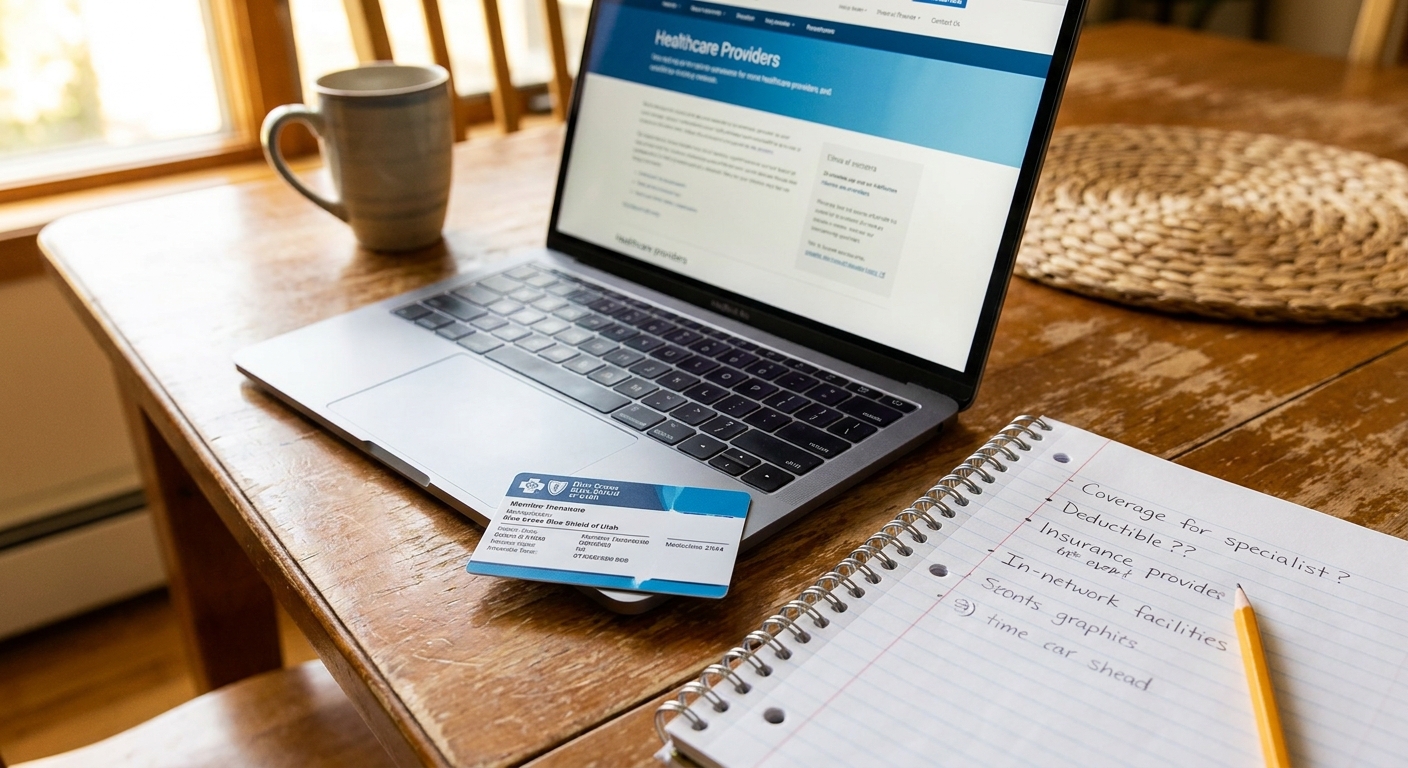
The process is simple on your end. When you call, our Lions Gate Rehab admissions team collects the essentials and answers your first questions: your insurance provider name, the member ID, and the insured person’s date of birth. We also gather basic clinical information so we verify the right levels of care, meaning detox, residential, PHP, IOP, and dual diagnosis support if a mental health condition is part of the picture. That last part matters, because verifying only for detox when your loved one needs residential leaves you with a coverage answer that falls apart at admission.
Then we call your plan, read the policy, and confirm the specifics. You do not get a canned category list. You get what may be covered, what authorizations are required, what your estimated responsibility might look like, and where the gaps are. We remember exactly what that feeling is like, sitting by the phone waiting for someone to call back while a loved one’s window to say yes is closing. So we built the process to give you a usable answer now, not a promise of a callback in three days. If a piece is not covered, we tell you plainly and walk through self-pay or alternative options so you can move forward with clear eyes.
What Happens When Your BCBS Plan Has Coverage Gaps or Requires Authorization?
When a plan has coverage gaps or requires a single-case agreement, our in-house Lions Gate Rehab utilization review team submits the request the same day we identify the need and follows up daily until a decision comes back. Turnaround ranges from same-day to about a week, with out-of-network single-case agreements sometimes moving faster than in-network requests, though timing varies by plan.
Here is how the packet gets built. Utilization review compiles the medical necessity documentation, which includes the diagnostic summary and the supporting clinical information that establishes level-of-care need. Because our review team works in-house and talks with admissions every day, the clinical picture and the insurance picture stay aligned from the start. There is no game of telephone between a distant billing office and a treatment team that has never spoken. The packet goes out clean the first time, which can help keep a request from stalling in endless “we need more information” loops.
This is where recovery-led ownership shows up in something as unglamorous as paperwork. Our Lions Gate Rehab utilization review is not a corporate function three states away. The person handling these requests is also the mother of someone who struggled with addiction, and she understands the urgency you feel because she has lived it. That combination of clinical accuracy, daily coordination, quality of care, and real personal understanding of the stakes is why gaps get worked instead of ignored. We stay on it daily so you are not left waiting in uncertainty, wondering whether anyone is actually fighting for the coverage.
Does BCBS Cover Dual Diagnosis Treatment at Lions Gate?
BCBS may cover dual diagnosis treatment when both the substance use disorder and the co-occurring mental health condition are clearly documented. With some BCBS plans, strong dual-diagnosis documentation can support consideration for 45 to 60 days of residential treatment when the clinical picture supports that level of care, though every case is different.
We at Lions Gate Rehab document medical necessity using the ASAM Criteria and DSM-5 diagnoses across all six ASAM dimensions. In plain terms, ASAM is the standard framework insurers rely on to decide what level of care a person may need, and DSM-5 is how the diagnoses themselves are defined. Co-occurring conditions are common in the patients who walk through our doors, and research housed at the National Institutes of Health reflects how often substance use and mental health conditions travel together. Depression, anxiety, trauma and PTSD, bipolar disorder, and personality disorders sit underneath a lot of the alcohol and drug use we treat.
The dimensions that often drive a residential authorization are Dimension 3 and Dimension 5. Dimension 5, relapse and continued-use potential, is frequently key. Our Lions Gate Rehab clinical team, admissions, and utilization review work the documentation together, and concurrent reviews address all six dimensions on a schedule that runs anywhere from every three or four days to every fourteen, depending on the plan. We will tell you honestly if the presentation does not appear to meet the clinical threshold for residential. We do not open an authorization we cannot support, and we never back anyone into a corner. Instead, we explain what may be an appropriate next step so you understand the clinical fit.
What Will You Actually Pay Out of Pocket With BCBS Coverage?
Your out-of-pocket cost depends on four things in your specific plan: your deductible, your coinsurance, your out-of-pocket maximum, and any authorization limits on covered days. That is precisely why we verify the actual policy up front instead of handing you a vague range and disappearing for three days.
Think of it this way. Your deductible is what you pay before the plan starts sharing costs. Coinsurance is the percentage you keep paying after that. Your out-of-pocket maximum is the ceiling, the most you can be asked to pay in a plan year before the plan covers the rest. And authorization limits control how many days of each level of care your plan may approve at a time. Move any one of those numbers and your real cost changes, sometimes by thousands of dollars. A plan that covers residential at 80 percent coinsurance with a $2,000 deductible leaves you in a very different place than one at 50 percent with a $6,000 deductible.
When we verify your benefits, we set your specific numbers against our published rates so you see the estimate that may apply to you. If your loved one may need 45 days of residential and your plan authorizes 30 with a defined coinsurance, we show you what that gap might cost and how a single-case agreement or continued authorization might close it. You deserve to decide with real figures in front of you, not a hopeful guess. The best help is honest help, and honest help starts with numbers you can trust.
Does It Matter If Your BCBS Plan Is PPO, HMO, or From Another State?
It matters a great deal. A PPO bought on the exchange covers different services than a small-group HMO through an employer, and an out-of-state BCBS plan follows different authorization rules than a Utah-based plan. The BCBS name on the card tells you very little until we read the plan behind it.
PPO plans usually give you more flexibility with out-of-network providers, which affects whether we pursue an in-network authorization or an out-of-network single-case agreement. HMO plans tend to be stricter about staying in a defined network and may require referrals or tighter authorization. Employer group plans, exchange plans, and individual plans all carry different benefit structures, even when they wear the same Blue Cross logo. And because BCBS is a federation of independent companies, a plan issued in another state processes claims and authorizations under that state’s plan rules, not Utah’s.
For a St. George family, this is where an outsourced or corporate verification process tends to slow down. Someone unfamiliar with your exact plan type gives you a generic answer, then walks it back a week later once the details surface. We avoid that by reading your plan types, issuer, and network status on the first call, so the coverage picture you get may hold up when your loved one is actually admitted. We take the time to find out which bottle you are actually holding.
What If BCBS Does Not Cover Enough Days or Denies the Level of Care?
If BCBS authorizes fewer days than the clinical picture may call for, or denies a level of care, we do not simply accept it and hand you a bill. Our Lions Gate Rehab utilization review team pursues concurrent review and, where appropriate, a peer-to-peer discussion between the clinician and the plan’s reviewer to make the case for the medically necessary level of care. When authorization still falls short, our published self-pay rates give you a clear, transparent fallback, so you are never guessing.
Those rates are the same ones we quote to anyone: detox at $800 per day, residential at $13,500 for 30 days, $20,000 for 45 days, and $22,000 for 60 days, PHP at $7,000 for 30 days, and IOP at $7,000 for 16 weeks or until clinical completion. People who have graduated the Lions Gate Rehab program receive continuing outpatient support at no cost, which matters because relapse risk does not end the day residential ends, a reality the treatment research at the National Institute on Drug Abuse has long underscored.
We treat authorization limits as something to work, not something to surrender to. Recovery-led ownership means the people making these calls know what may be at stake when a plan tries to cut a stay short before behavioral change has had time to take hold. We share our experience, we tell you the truth about what the clinical picture may support, and we leave the door open. If insurance cannot carry the full stay, you will know your options in plain numbers, and we will be here should you need us.
How Long Does It Take to Get a Final Answer on BCBS Coverage?
You may get an initial coverage picture the same day you call during business hours. For authorizations and single-case agreements, utilization review compiles the medical necessity documentation the day the need is identified, follows up daily, and reaches a decision anywhere from same-day to about a week out, though timing varies. Out-of-network single-case agreements sometimes move faster than in-network requests, but this depends on the specific plan.
The initial verification and the final authorization are two separate clocks, and confusing them is where a lot of families lose sleep. The first clock, basic coverage confirmation, runs fast. We read your benefits and confirm what your plan may cover, what it requires, and roughly what you may owe, often within hours. The second clock, formal authorization for a specific level of care, depends on your plan’s review process and how quickly their reviewer responds. That is the piece we chase daily so it does not drift.
So when a family asks, “does BCBS cover rehab, and how soon will we know,” we split the answer into those two timelines and keep you posted on both. What you will not get from us is the corporate stall: a promise to call you back, then silence while your loved one’s willingness fades. Our verification and utilization review sit inside the Lions Gate Rehab program in St. George and coordinate with admissions every day, so the clinical and insurance sides do not fall out of step. You will know where your case stands, because we would want the same if it were our family on the line.
Call Lions Gate at the number on this page to verify your BCBS benefits the same day and receive an estimate of coverage, required authorizations, and out-of-pocket costs before you make any treatment decision. One call, real numbers, and no waiting three days for a callback, because the honest answer to “does BCBS cover rehab” should come from reading your actual policy, not from a hopeful guess.
Take the Next Step with Confidence
If you’re wondering whether your Blue Cross Blue Shield plan will cover treatment at Lions Gate Rehab in St. George, the quickest way to get clarity and assistance is to speak directly with our admissions team. We’ll verify your specific benefits, walk you through what your plan covers, help you understand your out-of-pocket costs and the quality care you can expect, before you commit to anything. You don’t have to figure this out alone.
Coverage and cost estimates vary based on your individual plan, benefits, and clinical circumstances. The information provided represents one possible scenario and should not be considered typical or guaranteed for any individual.