
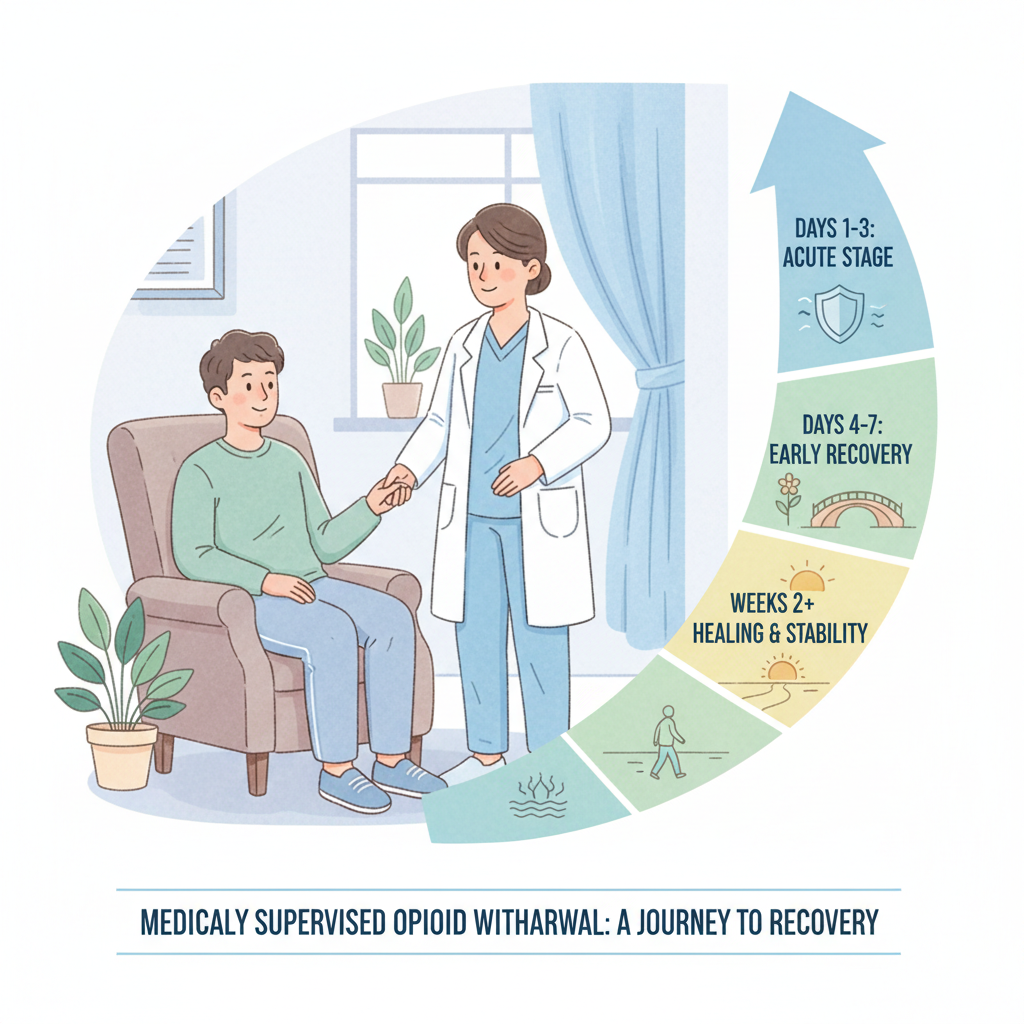
Understanding the opioid withdrawal timeline
When people talk about “detox,” they are usually describing the acute opioid withdrawal process, from your last use through medical stabilization. Having the opioid withdrawal timeline explained in clear steps can help you prepare, reduce fear, and choose safer support.
Opioid withdrawal happens when your body has become dependent on opioids and the medication or drug is suddenly reduced or stopped. This can occur with prescription pain pills, heroin, fentanyl, methadone, or buprenorphine. The sudden absence of opioids triggers overactivity in your nervous system, often referred to in medical literature as adenylyl cyclase superactivation, which leads to typical withdrawal symptoms such as anxiety, sweating, gastrointestinal distress, and agitation [1].
Medical detox is not about “toughing it out.” It is a structured, short-term stabilization phase that helps you get through withdrawal as safely and as comfortably as possible so that you are ready for the next level of care. Understanding what to expect in each phase can help you and your family make informed decisions about when a medically supervised withdrawal program is necessary.
If you are still deciding whether detox is appropriate, you may find it helpful to review the signs you need medical detox and when is detox medically necessary.
What causes opioid withdrawal
Opioids affect your brain’s reward and pain pathways. Over time, your nervous system adapts to having opioids present. When you stop or sharply reduce use, a rebound effect occurs. This is what clinicians call opioid withdrawal syndrome, and it can also be triggered if you are given partial agonists like buprenorphine or antagonists like naloxone too early while full opioids are still active in your system [1].
You might experience a combination of physical and emotional symptoms. According to current diagnostic criteria, clinical signs can include:
- Runny nose and watery eyes
- “Goose flesh” or chills
- Muscle and bone aches
- Nausea, vomiting, and diarrhea
- Enlarged pupils and sensitivity to light
- Insomnia and restlessness
- Fast heart rate, sweating, elevated blood pressure, and increased temperature
- Frequent yawning and anxiety [1]
These symptoms are not typically life threatening by themselves in otherwise healthy adults, but they can be extremely uncomfortable, can worsen other medical or psychiatric conditions, and can increase your risk of relapse or complications. That is why many people choose medically monitored detox instead of attempting to stop on their own. You can learn more about the comparative dangers of detoxing at home if you are weighing your options.
Factors that shape your withdrawal timeline
The opioid withdrawal timeline is not identical for everyone. Your experience is influenced by several key factors that affect when symptoms begin, how intense they feel, and how long they last.
Some of the most important influences include:
- The type of opioid you have been using
- Whether it is short acting or long acting
- How long you have been using and at what dose
- How often you take it each day
- Your age, metabolism, and overall physical health
- Co occurring mental health conditions, such as depression or anxiety
- Whether you taper slowly or stop abruptly
- Any other substances you are using, such as alcohol or benzodiazepines [2]
High potency opioids, including some fentanyl formulations and strong extended release medications, can lengthen or complicate your withdrawal course [2]. If you are using multiple substances, your medical team will take that into account when planning detox so that each substance is addressed in a safe sequence.
If you are comparing opioids to other substances, you may also want to read about the alcohol withdrawal symptoms timeline, since alcohol carries its own distinct medical risks.
Short acting opioid withdrawal timeline
Short acting opioids include heroin, codeine, and many immediate release prescription pain medications such as oxycodone IR. These substances leave your system relatively quickly, so withdrawal usually starts sooner and moves through phases more rapidly.
6 to 12 hours after last use
Most people begin to notice early symptoms within 6 to 12 hours after their last dose of a short acting opioid. You may feel:
- Growing anxiety or irritability
- Restlessness or an inability to get comfortable
- Yawning and watery eyes
- Runny nose and mild sweating
This is often when cravings intensify. In a medically supervised setting, staff can begin supportive medications and monitoring to reduce discomfort and help you stay engaged with the detox process.
24 to 72 hours: peak symptoms
Withdrawal from short acting opioids typically peaks within 1 to 3 days. During this period, symptoms are usually at their strongest [2]. You might experience:
- Intense muscle and bone aches
- Nausea, vomiting, diarrhea, and abdominal cramping
- Sweating, chills, and “goose flesh”
- Dilated pupils and sensitivity to light
- Elevated heart rate, blood pressure, and breathing rate
- Significant insomnia, agitation, and strong cravings
Although this phase can feel overwhelming, medical detox focuses on stabilizing your vital signs, managing pain and gastrointestinal upset, and protecting you from complications like dehydration.
4 to 10 days: symptoms improving
For many people withdrawing from short acting opioids, acute symptoms begin to lessen after about day 4 and continue to improve through day 7 to 10. You might still feel:
- Low energy and fatigue
- Residual muscle aches
- Sleep disruption
- Mood swings or anxiety
During this stage, medications can be adjusted as your body stabilizes. Your detox team will also start preparing you for what comes next in treatment so that you do not leave this phase without a clear plan.
For more detail on stabilization timeframes across substances, you can explore how long does detox take.
Long acting opioid withdrawal timeline
Long acting opioids include methadone, extended release oxycodone, morphine ER, some fentanyl preparations, and similar medications. Because they remain in your body longer, the onset of withdrawal is delayed and the course can be more drawn out.
24 to 72 hours after last use
With long acting opioids, you may not feel much change for the first day. Symptoms usually begin 24 to 72 hours after your last dose, and they often start more gradually [2]. Early signs can include:
- Mild anxiety and restlessness
- Sleep difficulty
- Aching muscles or joints
- Early gastrointestinal discomfort
- Sweating and temperature changes
If you are in a detox setting, your care team will watch these early changes closely and use tools such as the Clinical Opioid Withdrawal Scale, or COWS, to track severity over time. The COWS system assigns a score that ranges from mild to severe, which can guide decisions about when to adjust medications or begin certain treatments [1].
Days 3 to 7: peak and plateau
Withdrawal from long acting opioids usually peaks a little later, often between days 3 and 7. Symptoms can mirror those seen with short acting opioids but may be somewhat less intense and more prolonged:
- Worsening muscle and bone pain
- Significant insomnia and agitation
- Nausea, vomiting, or diarrhea
- Sweating, chills, and “goose bumps”
- Faster heart rate and blood pressure changes
- Strong cravings and mood symptoms
During this time frame, supportive care focuses on maintaining hydration, nutrition, and rest, alongside targeted medications that reduce your nervous system overactivity.
10 to 20 days: gradual resolution
Compared with short acting opioids, long acting medication withdrawal often lasts longer overall. Symptoms can persist from 10 up to 20 days, but they generally lessen in intensity as time passes [2].
You might notice:
- Gradual return of appetite
- Improved sleep, though not always fully normal yet
- Reduced sweating and gastrointestinal upset
- Ongoing low mood or anxiety
Your medical team will adjust your detox plan as these changes appear and will work with you on a transition plan into ongoing treatment services once you reach a stable baseline.
Buprenorphine and partial agonist withdrawal
Partial opioid agonists such as buprenorphine are often used in medication assisted treatment, and they can also cause withdrawal symptoms if stopped abruptly.
Because buprenorphine has a long half life and interacts differently with opioid receptors, withdrawal usually starts later and may be milder compared to full agonists. Symptoms typically begin 36 to 72 hours or more after the last dose [2]. You may notice:
- Gradual onset of anxiety, restlessness, or insomnia
- Mild to moderate muscle aches
- Flu like discomfort and fatigue
- Some gastrointestinal upset
Detox from buprenorphine is often managed with a slow taper, and in some cases with supportive non opioid medications. Because timing and dosing are important, this is another situation where medical supervision can protect your safety and comfort.
It is also important to know that when buprenorphine is started too early after your last use of a full opioid, it can trigger “precipitated withdrawal.” To lower this risk, guidelines recommend waiting 12 to 18 hours after the last dose of a short acting opioid, or 24 to 48 hours after a long acting opioid, and only starting buprenorphine when withdrawal symptoms have clearly begun [1].
Acute withdrawal vs post acute symptoms
The timelines described so far focus on acute opioid withdrawal, which usually lasts from a few days up to 2 or 3 weeks depending on the substance. For many people, certain symptoms improve significantly by the end of this period, especially in a structured detox environment.
However, some effects can linger beyond the acute phase. This is often referred to as Post Acute Withdrawal Syndrome, or PAWS. After the initial withdrawal phase, you might still experience:
- Sleep problems
- Low energy or fatigue
- Depressed mood or anxiety
- Difficulty concentrating
- Intermittent cravings [2]
PAWS can last for weeks or months, and it is one reason why detox is only the first step in treatment. Ongoing medical and behavioral support help you manage these longer term symptoms and reduce relapse risk. If you would like to know more about how care continues, you can read about what happens after detox.
How medical teams assess withdrawal severity
In a medically supervised withdrawal stabilization program, your care team will not rely only on how you say you feel. They also use structured assessment tools and vital sign checks to better understand what your body is going through.
One of the most widely used tools is the Clinical Opioid Withdrawal Scale (COWS). This scale rates different signs and symptoms such as restlessness, pupil size, sweating, gastrointestinal upset, tremor, and anxiety. Each is scored, and the total number indicates whether your withdrawal is mild, moderate, moderately severe, or severe [1].
Your team uses this information to:
- Decide when to start or adjust medications
- Monitor your response to treatment over time
- Reduce the risk of complications
- Determine when you have reached a stable baseline and can safely transition out of detox
This structured approach is one of the reasons many people feel more secure in a medical setting than trying to manage withdrawal alone. You can learn more about what to expect from a supervised setting in our overview of how medical detox works.
In medically monitored detox, the goal is stabilization, not “finishing” treatment. Withdrawal is the beginning of recovery, not the destination.
Medications used during opioid withdrawal
While detox does not erase addiction, appropriate medications can significantly reduce the intensity of opioid withdrawal and help you stay engaged with care.
Clinicians commonly use:
- Methadone, a full opioid agonist that can be prescribed to manage withdrawal symptoms. Treatment may begin around 10 mg every 4 to 6 hours as needed, then adjusted based on your response [1].
- Buprenorphine, a partial agonist that eases symptoms and cravings. It must be started at the right time relative to your last use to avoid precipitated withdrawal, typically at least 12 to 18 hours after short acting opioids or 24 to 48 hours after long acting opioids, once moderate withdrawal is present [1].
- Lofexidine hydrochloride, a non opioid medication approved in 2018 that reduces overactivity in your sympathetic nervous system and can decrease several withdrawal symptoms when used for up to about 14 days [1].
Additional medications may be used to manage specific symptoms such as nausea, diarrhea, insomnia, or muscle pain. Your medical team will tailor your regimen to your health history, other medications, and the substances you have been using. For a broader overview of pharmacologic options in detox settings, you can explore our resource on medications used during detox.
Why medically supervised detox matters
Facing the opioid withdrawal timeline on your own can feel daunting. You might worry about pain, fear of being judged, or uncertainty about what comes after detox. A medically supervised program is designed to address those concerns in a structured, humane way.
In a professional detox setting, you can expect:
- A medical evaluation before withdrawal begins
- Continuous monitoring of your vital signs and symptoms
- Evidence based use of medications to ease discomfort
- Protection from dehydration and other complications
- Support from nurses, physicians, and counselors
- A clear plan for continuing care once you are stabilized
Detox is not the same as long term rehab and it is not meant to address every psychological or social factor contributing to opioid use. Instead, it is a focused phase that prepares your body and mind for the next steps in recovery.
If you are wondering how to begin, the detox admissions process outlines what typically happens from your first phone call through your arrival at a program.
What happens after you are stabilized
Once you reach the end of the acute withdrawal phase, your medical team will talk with you about what comes next. This is an important moment. Cravings may still appear, and some symptoms can continue at a lower level, so having a plan in place before leaving detox can reduce the risk of relapse.
Next steps might include:
- Transitioning directly into a structured outpatient or intensive outpatient program
- Beginning or continuing medication assisted treatment with buprenorphine or methadone
- Engaging in individual or group therapy to address underlying issues
- Connecting with peer support groups and recovery communities
- Coordinating care for co occurring mental health conditions
Detox is the doorway to these services, not a stand alone solution. To better understand how care continues beyond the withdrawal phase, visit what happens after detox.
If you or someone you care about is facing opioid dependence, knowing the opioid withdrawal timeline explained in realistic, medically accurate terms can help you approach the process with more clarity and less fear. With appropriate medical support, withdrawal can be managed safely, and stabilization can become the first step toward long term change.